
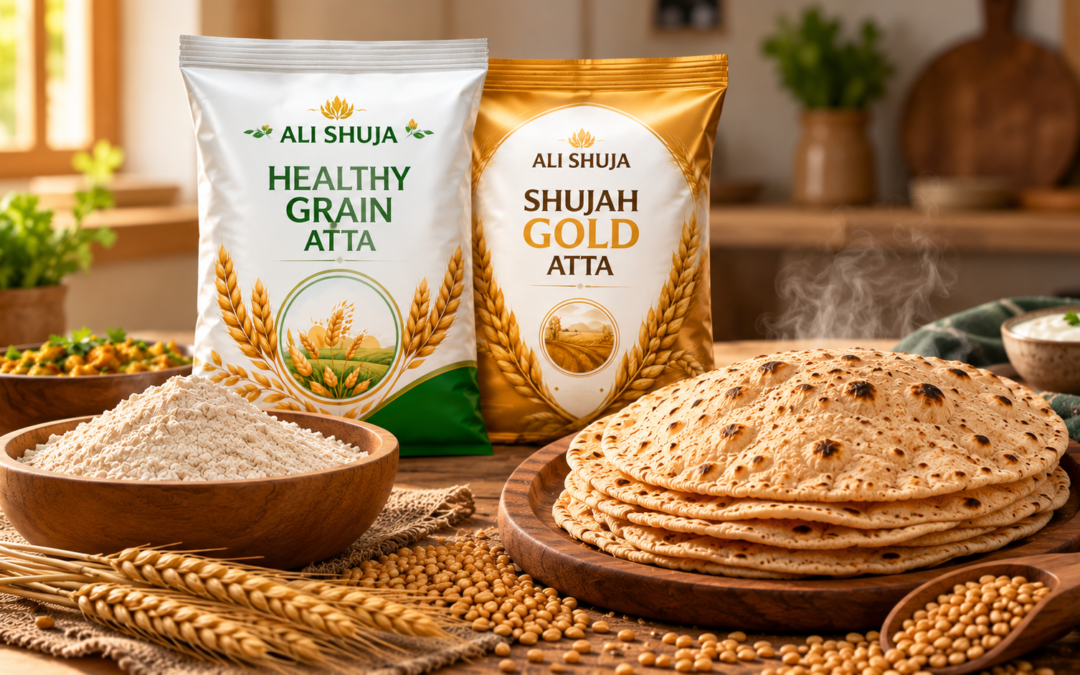
How to Make Soft, Fresh Roti with Quality Atta
Soft, fresh roti is a favourite in Pakistani households and an essential part of many everyday meals. Whether served with daal, vegetables, chicken curry, or other traditional dishes, a well-made roti adds warmth and comfort to the dining table.
Making soft roti at home depends on a few simple factors: choosing suitable atta, adding the right amount of water, kneading the dough properly, allowing it to rest, and cooking it at the correct temperature.
Ali Shuja Flour Mills offers Shujah Gold Atta and Healthy Grain Atta for everyday household cooking. In this guide, we explain the steps and practical techniques that can help you prepare soft, fresh roti in your own kitchen.
Choose the Right Atta for Soft Roti
The flour you use influences how your dough feels, how easily it rolls, and the texture of the finished roti. Wheat variety, flour composition, and milling characteristics can all affect the result.
When choosing atta, consider its suitability for everyday flatbreads, the condition of the packaging, and any product information available on the label.
Ali Shuja Flour Mills features two atta products: Shujah Gold Atta and Healthy Grain Atta. You can explore the available options on our Products page to find information relevant to your cooking needs.
Remember that even suitable flour needs proper handling. The amount of water, kneading technique, resting time, and cooking temperature can make a noticeable difference to the final texture.
Gather Your Ingredients and Equipment
A basic roti recipe requires only a few ingredients and common kitchen tools.
Ingredients for approximately 6–8 rotis:
-
2 cups atta
-
Approximately ¾ cup water, added gradually
-
A little extra flour for dusting, as needed
The amount of water is approximate because different flours absorb moisture differently. You may need slightly more or less to achieve a soft, workable dough.
Equipment:
-
A mixing bowl or clean kneading surface
-
A rolling pin and rolling board
-
A tawa or flat cooking pan
-
A clean kitchen cloth or covered container for resting the dough
You can prepare roti with these basic ingredients without adding oil or other ingredients to the dough. The traditional preparation method keeps the recipe simple and versatile.
3. Knead the Dough to the Right Consistency
Place the atta in a mixing bowl and add water gradually while mixing with your hand. Continue combining the ingredients until the flour begins to form a dough.
Knead the mixture until it becomes smooth, soft, and manageable. It should hold together without crumbling, but it should not be excessively sticky.
If the dough feels dry or cracks while kneading, add a little water at a time. If it becomes too sticky, lightly dust your hands or the work surface with atta rather than adding large amounts of extra flour.
Avoid making the dough too firm. A very stiff dough can be difficult to roll and may produce a less tender roti.
With practice, you will learn how much water works best for your flour and preferred roti texture.
Allow the Dough to Rest
After kneading, cover the dough with a clean cloth or place it in a covered bowl. Let it rest for approximately 15–20 minutes.
Resting gives the flour more time to absorb moisture and allows the dough to relax. This can make it easier to roll evenly without excessive resistance or shrinkage.
After resting, briefly knead the dough again if necessary. Divide it into evenly sized portions and roll each portion between your palms to form a smooth ball.
Keep the remaining dough covered while you work so that its surface does not dry out.
Although resting times can vary depending on the flour and kitchen conditions, allowing a short rest is a useful step when preparing everyday roti.
Roll the Roti Evenly
Lightly dust a dough ball with atta and flatten it on a clean rolling board. Use a rolling pin to roll it into a round, even disc.
Try to maintain a reasonably consistent thickness across the roti. If the centre is much thicker than the edges, the bread may cook unevenly. If the dough is rolled too thin, the roti may dry out more quickly.
Turn the dough occasionally as you roll, using a light touch rather than pressing excessively. Add only enough dusting flour to prevent sticking.
If the dough repeatedly shrinks back, cover it and let it rest for a few more minutes before continuing.
A little patience at this stage can help you produce rotis that cook more evenly and are easier to handle.
Cook the Roti on a Properly Heated Tawa
Place a clean tawa over medium to medium-high heat and allow it to warm up. Put the rolled roti on the hot surface and cook until small bubbles begin to appear and the underside develops light brown spots.
Flip the roti and cook the other side. Depending on your technique and equipment, you may turn it again briefly to finish cooking.
If you prefer a puffed roti, you can carefully place it over a suitable direct flame using appropriate kitchen tools, provided your cooking setup is designed for this method. Alternatively, finish it on the tawa by adjusting the heat and pressing gently with a clean spatula where needed.
Avoid leaving the roti on the pan for too long, as excessive cooking can remove moisture and make it dry or stiff.
The tawa should be hot enough to cook the bread efficiently without burning the surface before the inside is cooked.
Keep Your Roti Soft After Cooking
Once cooked, transfer the roti to a clean, covered container or a roti basket lined with a clean cloth. Covering the rotis helps retain warmth and reduces moisture loss.
If you are preparing several rotis for a meal, stack them as they finish cooking and keep them covered until serving. Avoid leaving them exposed to air for long periods.
Some households lightly brush cooked roti with ghee or butter according to taste. This is optional and is not necessary for making basic roti.
For the best texture, serve the rotis while fresh. If you need to store leftovers, allow them to cool appropriately and refrigerate them in a covered container. Reheat them briefly before serving.
Proper flour storage also matters. Keep unused atta in a clean, airtight container in a cool, dry place, and follow the storage instructions provided on the package.
Enjoy Everyday Roti with Ali Shuja Flour Mills
Making soft roti does not require complicated ingredients or equipment. By selecting suitable atta, adding water gradually, kneading the dough well, allowing it to rest, rolling it evenly, and controlling the cooking temperature, you can improve the consistency of your homemade flatbreads.
Ali Shuja Flour Mills has been producing flour products since 1985. Our range includes Shujah Gold Atta and Healthy Grain Atta, giving households options to explore for their everyday cooking.
Visit our Products page to learn more about the available atta products. You can also discover About Ali Shuja Flour Mills and learn more about our milling process.
With the right preparation and a little practice, fresh, homemade roti can become an easy and enjoyable part of your daily meals.
For further product information, please visit our Contact Us page.
How do you make soft roti at home?
To make soft roti, knead atta with water until the dough becomes smooth and pliable. Let it rest for approximately 15–20 minutes, roll it evenly, and cook it on a properly heated tawa. Avoid overcooking, as this can make the roti dry.
Why does my roti become hard after cooking?
Roti can become hard if the dough is too dry or firm, the dough has not rested sufficiently, the roti is rolled unevenly, or it is cooked for too long. Adjust the water gradually, allow the dough to rest, and keep cooked rotis covered.
How much water should I add to atta for roti?
For 2 cups of atta, start with approximately ¾ cup of water and add more gradually as needed. The exact amount depends on the flour’s absorption characteristics and the desired dough consistency.
Which atta is suitable for making roti?
Choose atta appropriate for flatbreads and consider the product information, flour characteristics, and your preferred roti texture. Ali Shuja Flour Mills offers Shujah Gold Atta and Healthy Grain Atta, which you can explore on the company’s Products page.
How should I store atta to maintain its quality?
Store atta in a clean, airtight container in a cool, dry place away from moisture, direct sunlight, and strong odours. Use clean, dry utensils and follow the storage guidance on the packaging.