
How to Choose the Right Atta for Your Family
Atta is a kitchen essential in many Pakistani households. From everyday roti and chapati to paratha and stuffed flatbreads, the flour you choose can influence dough consistency, cooking results, and the overall experience of preparing meals.
With different atta products available, choosing the right one involves more than looking at the packaging. It helps to consider your family’s cooking habits, the characteristics of the flour, the product information on the label, and how much flour your household uses.
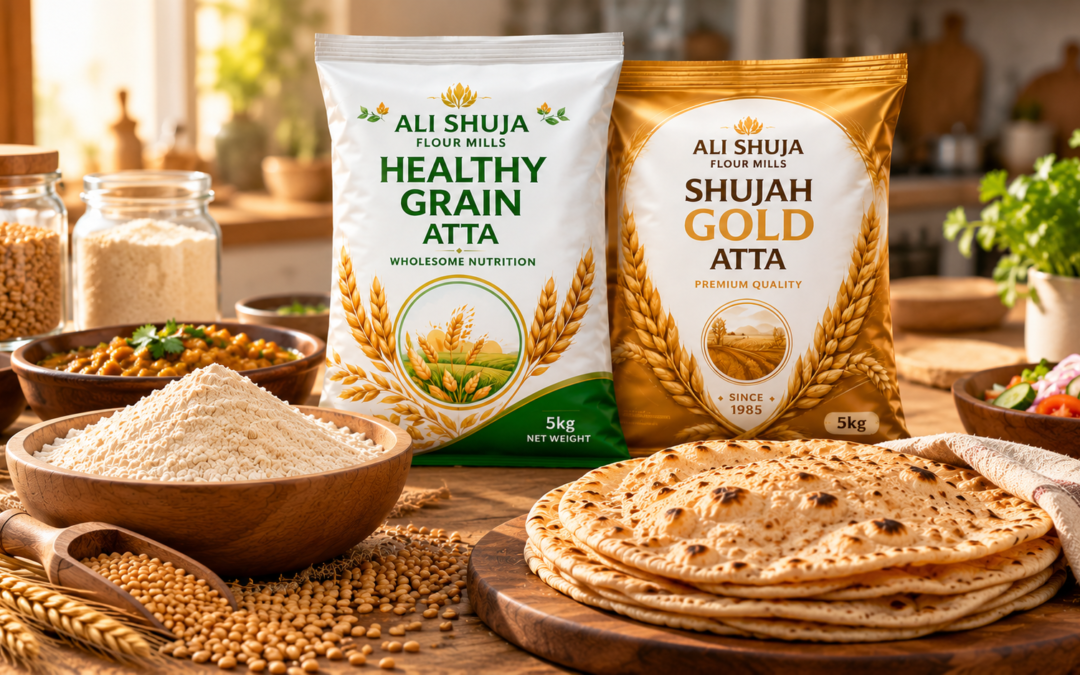
Ali Shuja Flour Mills offers Shujah Gold Atta and Healthy Grain Atta. This guide explains the practical factors to consider when selecting atta for your family’s everyday meals.
Understand Your Family’s Cooking Needs
Start by considering the foods you prepare most frequently. If your household makes roti or chapati every day, look for flour that is suitable for these flatbreads and provides dough characteristics you find easy to work with.
Families that regularly prepare paratha, stuffed breads, or other flour-based recipes may also want to consider how the flour performs across different preparations.
Think about your preferred texture, the amount of time you spend preparing dough, and the cooking methods you use. These everyday factors can help you determine which product is most suitable for your kitchen.
Rather than assuming that one flour works identically for every recipe, consider the intended use and follow the preparation recommendations available for the product.
Check the Flour’s Characteristics
The characteristics of atta can affect how it behaves during preparation. Factors such as wheat variety, flour composition, particle size, and milling methods can influence water absorption, dough handling, and the texture of the cooked bread.
When preparing roti, for example, some flour may require slightly more water than another to achieve a soft, manageable dough. Kneading and resting time can also affect the final result.
If you are trying a new atta product, start with a familiar recipe and add water gradually. Observe how the dough feels and make small adjustments as necessary.
These practical observations can help you understand how a particular flour works in your kitchen without relying on assumptions based solely on its name or packaging.
Read the Product Label Carefully
The product label is an important source of information when choosing packaged atta. Before purchasing, check the product name, ingredient information, net weight, storage instructions, and any nutritional details provided.
If your household has particular dietary requirements, review the available ingredient and allergen information carefully. Contact the manufacturer if you need clarification about details that are not stated on the package.
You should also inspect the packaging to ensure it is intact and appears suitable for protecting the flour.
Avoid assuming that words such as premium, healthy, or gold automatically establish a particular nutritional profile. For accurate comparisons, use the product’s published specifications and nutritional information where available.
Consider Packaging Size and Household Usage
Choosing a suitable pack size can help your family manage flour consumption and storage.
A household that prepares roti daily may use atta more quickly than a household that cooks flatbreads only occasionally. Consider how much flour you typically use each week and whether you have enough clean, dry storage space.
Buying a quantity that suits your usage can make it easier to keep track of freshness and avoid leaving flour unused for extended periods.
Check the net weight before purchasing so you can compare package quantities accurately. Also consider whether the packaging is easy to handle and transfer into a suitable storage container after opening.
Choose Atta That Suits Your Everyday Recipes
Different meals may call for slightly different preparation techniques, even when they use the same basic ingredient.
For roti and chapati, pay attention to dough softness, resting time, rolling thickness, and cooking temperature. These factors can influence whether the finished bread remains soft and cooks evenly.
For paratha, the rolling method, folding technique, and ingredients used during cooking also contribute to the final texture.
If you prepare several types of flatbread at home, consider testing a flour with your usual recipes before making it your regular choice. This allows you to evaluate its handling and cooking performance based on your own preferences.
Ali Shuja Flour Mills features Shujah Gold Atta and Healthy Grain Atta. Visit our Products page to explore the available options and review the product information provided.
Store Atta Properly After Purchase
Choosing suitable flour is only part of maintaining its quality. Storage conditions after purchase are important too.
Keep atta in a clean, dry, airtight container in a cool place away from direct sunlight, excessive heat, moisture, and strong odours. Use a clean, dry utensil when removing flour, and avoid introducing moisture into the container.
Check the packaging for storage instructions and best-before information. When transferring flour into another container, make sure the container is clean and completely dry.
Inspect flour before use. If it develops an unusual smell, visible mould, signs of insects, or other indications of spoilage, do not consume it.
Good storage practices help protect the flour and make everyday meal preparation more convenient.
Explore Atta from Ali Shuja Flour Mills
Choosing atta for your family becomes easier when you understand your cooking needs, review product information, consider packaging size, and pay attention to storage.
Ali Shuja Flour Mills has a history dating back to 1985 and features Shujah Gold Atta and Healthy Grain Atta in its product range. These products provide options for households looking for atta for everyday cooking.
Explore the available products on our Products page. You can also learn more about Ali Shuja Flour Mills and discover information about our milling process.
For additional product information or business enquiries, please visit our Contact Us page.
The best choice for your household is one that suits your recipes, meets your requirements, and can be stored and used properly. Taking a little time to evaluate these factors can help make your everyday cooking more consistent.
How do I choose the right atta for my family?
Consider the foods your family prepares most often, the flour’s suitability for those recipes, the product label, packaging size, and available nutritional information. Choose a product that matches your household’s cooking habits and requirements.
What should I check before buying packaged atta?
Check the product name, ingredient information, net weight, packaging condition, storage instructions, and any available nutritional details. If you have specific dietary requirements, verify the relevant information on the label or with the manufacturer.
Which atta is suitable for making soft roti?
Choose atta suitable for flatbreads and pay attention to dough preparation. Adding water gradually, kneading properly, allowing the dough to rest, rolling evenly, and avoiding overcooking can help produce softer roti.
How much atta should a family buy at a time?
The appropriate quantity depends on household size, how frequently you prepare flour-based meals, and your available storage space. Estimate your usual consumption and select a pack size that you can use while maintaining proper storage conditions.
Which atta products does Ali Shuja Flour Mills offer?
Ali Shuja Flour Mills features Shujah Gold Atta and Healthy Grain Atta. Visit the Products page to explore the available products and review their published details.