
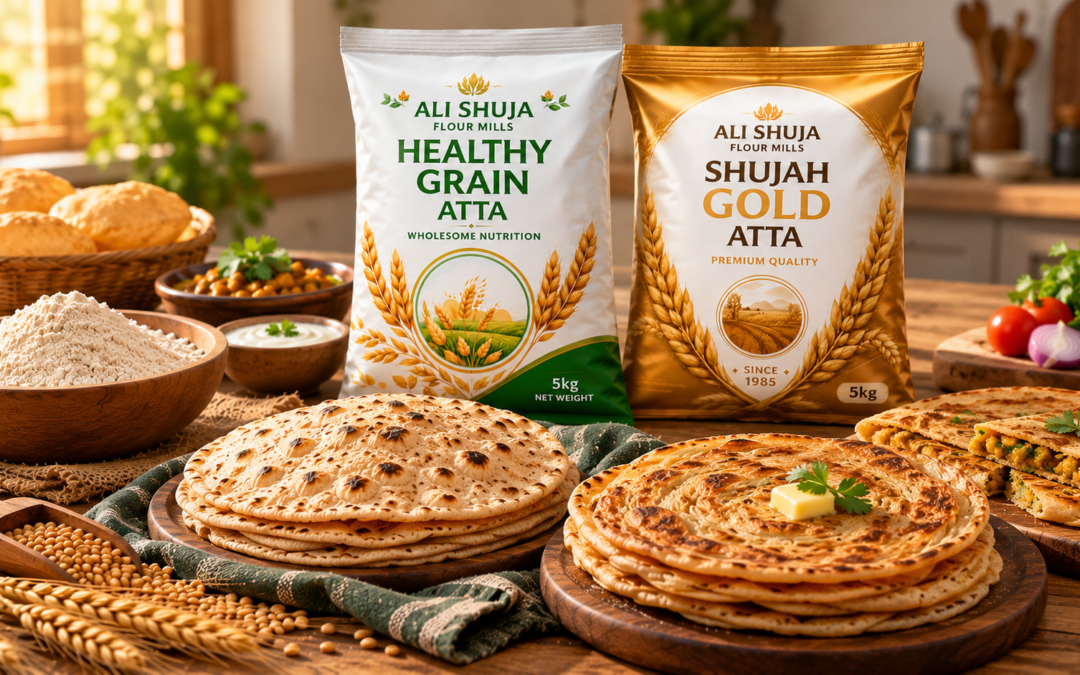
Best Atta for Roti, Paratha, and Everyday Pakistani Meals
Atta is a staple ingredient in Pakistani cooking, used to prepare everything from everyday roti and chapati to flaky paratha and stuffed flatbreads. Although these foods may use similar basic ingredients, their preparation methods and desired textures can differ.
Choosing suitable atta, preparing the dough correctly, and adjusting cooking techniques can help you achieve more consistent results in your kitchen.
Ali Shuja Flour Mills offers Shujah Gold Atta and Healthy Grain Atta for households to explore. In this guide, we discuss the role of atta in popular Pakistani meals and share practical tips for preparing different types of flatbread.
Understanding Atta for Everyday Pakistani Cooking
Atta is commonly used to prepare flatbreads that accompany vegetables, lentils, meat dishes, and other everyday meals. Its characteristics depend on factors such as the wheat used, flour composition, and milling process.
These characteristics can influence how much water the flour absorbs, how easily the dough can be rolled, and the texture of the cooked bread.
When choosing atta, consider your regular recipes and the dough consistency you prefer. A flour that works well for your usual roti preparation may also be suitable for other flatbreads, although some recipes require adjustments to the dough or cooking method.
Review the product information available and experiment with familiar recipes to understand how a particular atta performs in your kitchen.
Choosing Atta for Soft Roti and Chapati
Roti and chapati are everyday favourites in many Pakistani households. Their preparation usually involves mixing atta with water, kneading the dough, allowing it to rest, rolling it into thin discs, and cooking it on a heated tawa.
For a softer result, begin by adding water gradually until the dough becomes smooth and pliable. Knead it well and cover it while it rests for approximately 15–20 minutes.
Divide the dough into evenly sized portions and roll them to a reasonably uniform thickness. Cook each roti on a properly heated tawa, turning it as needed until it is cooked through.
Avoid making the dough excessively firm or leaving the roti on the heat for too long. Both can contribute to a dry or stiff texture.
The ideal water quantity may vary between flour products, so adjust it according to the dough’s consistency rather than relying on a fixed measurement for every batch.
Selecting Atta for Flaky and Layered Paratha
Paratha differs from basic roti because its preparation may involve folding, layering, and using oil or ghee to create a richer texture.
Atta used for paratha should form a workable dough that can be rolled and folded without excessive cracking or sticking. Add water gradually and knead until the dough is manageable.
After resting, roll out a dough portion, apply a small amount of oil or ghee if the recipe calls for it, and fold it using your preferred layering technique. Roll it again gently and cook on a heated tawa, using an appropriate amount of fat according to the recipe.
Cooking over moderate heat helps the paratha cook through while developing a golden surface. Turning it as needed prevents one side from becoming overly dark before the centre is cooked.
The final texture depends on the dough, rolling method, layering, cooking temperature, and amount of fat used, as well as the characteristics of the flour.
Choosing Atta for Stuffed Flatbreads
Stuffed parathas and other filled flatbreads require dough that can be rolled around a filling without tearing easily.
Prepare a soft, manageable dough and allow it to rest before dividing it into portions. Use a filling that is not excessively wet, as excess moisture can make the dough difficult to seal and roll.
Place a suitable amount of filling in the centre of the dough, bring the edges together, seal them, and gently roll the stuffed portion. Avoid pressing too hard, particularly if the filling contains firm pieces or ingredients that may break through the dough.
Cook the flatbread on a heated tawa, turning it carefully until the dough is cooked and the surface develops the desired colour.
These techniques can be useful for potato paratha and other stuffed flatbreads commonly prepared at home.
What to Consider When Comparing Atta Products
When comparing atta products, look beyond the product name and packaging design. Review the available ingredient information, net weight, storage guidance, and nutritional details.
The flour’s characteristics and suitability for your preferred recipes are also important. If you prepare roti daily, pay attention to dough handling and the final texture. If you frequently make layered or stuffed parathas, consider how easily the dough rolls and holds its shape.
Packaging condition matters too. Choose a package that is intact and suitable for protecting the flour, and check the product information before use.
Ali Shuja Flour Mills features Shujah Gold Atta and Healthy Grain Atta. Visit our Products page to explore the available products and review their published details.
Practical Tips for Better Results with Atta
Small changes in preparation can improve the consistency of homemade flatbreads.
Add water gradually instead of pouring it all into the flour at once. Knead the dough until it becomes smooth, then allow it to rest under cover before rolling.
Use only enough dry flour to prevent sticking, since excessive dusting flour can affect the finished texture. Roll the dough evenly and maintain a suitable cooking temperature for the type of flatbread you are preparing.
Keep cooked rotis covered until serving to reduce moisture loss. For parathas, adjust the heat and cooking fat according to your recipe and preferred level of browning.
If your results vary, change one factor at a time, such as water quantity, resting time, rolling thickness, or heat. This makes it easier to identify which adjustment improves the outcome.
Store Atta Correctly to Maintain Its Quality
Proper storage helps protect atta from moisture, pests, contamination, and unwanted odours.
Transfer opened flour to a clean, dry, airtight container and keep it in a cool place away from direct sunlight and sources of moisture. Always use dry utensils when handling flour.
Follow the storage instructions and best-before information on the product packaging. Check the flour before use and do not consume it if you notice visible mould, signs of insects, or an unusual smell.
Choose a package size that suits your household’s consumption and available storage space. Using appropriate storage practices can help you maintain flour quality between meals.
Explore Atta Products from Ali Shuja Flour Mills
Roti, chapati, paratha, and stuffed flatbreads all have a place in Pakistani home cooking. Understanding the requirements of each recipe, choosing suitable atta, and preparing the dough carefully can help you achieve more consistent results.
Ali Shuja Flour Mills has a history dating back to 1985 and features Shujah Gold Atta and Healthy Grain Atta in its product range.
Explore the available options on our Products page, learn more about Ali Shuja Flour Mills, and discover information about our milling process.
For product details or other enquiries, please visit our Contact Us page.
With suitable flour and a few practical preparation techniques, you can make atta-based dishes a dependable part of your family’s everyday meals.
What is the best atta for roti and paratha?
Choose atta that suits your preferred flatbreads and produces workable dough for your recipes. Flour characteristics, water quantity, kneading, resting, and cooking technique all influence the final texture. Review product information to make an informed choice.
Can I use the same atta for roti and paratha?
Atta suitable for roti can often be used for paratha as well. However, paratha preparation may involve additional folding, layering, oil, or ghee, which affect the finished texture.
How can I make soft roti with atta?
Add water gradually, knead the dough until smooth, and allow it to rest under cover for approximately 15–20 minutes. Roll the dough evenly and cook on a properly heated tawa without overcooking.
How do I stop stuffed paratha dough from tearing?
Use a soft, workable dough, allow it to rest, avoid overfilling, and roll gently. Keeping the filling reasonably dry and sealing the dough properly can also help prevent tearing.
Which atta products are available from Ali Shuja Flour Mills?
Ali Shuja Flour Mills features Shujah Gold Atta and Healthy Grain Atta. Visit the Products page to explore the available products and their published information.