Flour quality is not determined only by what happens inside the milling facility. Once flour has been produced, it still needs to be protected as it makes its way to consumers.
This is where packaging plays an important role.
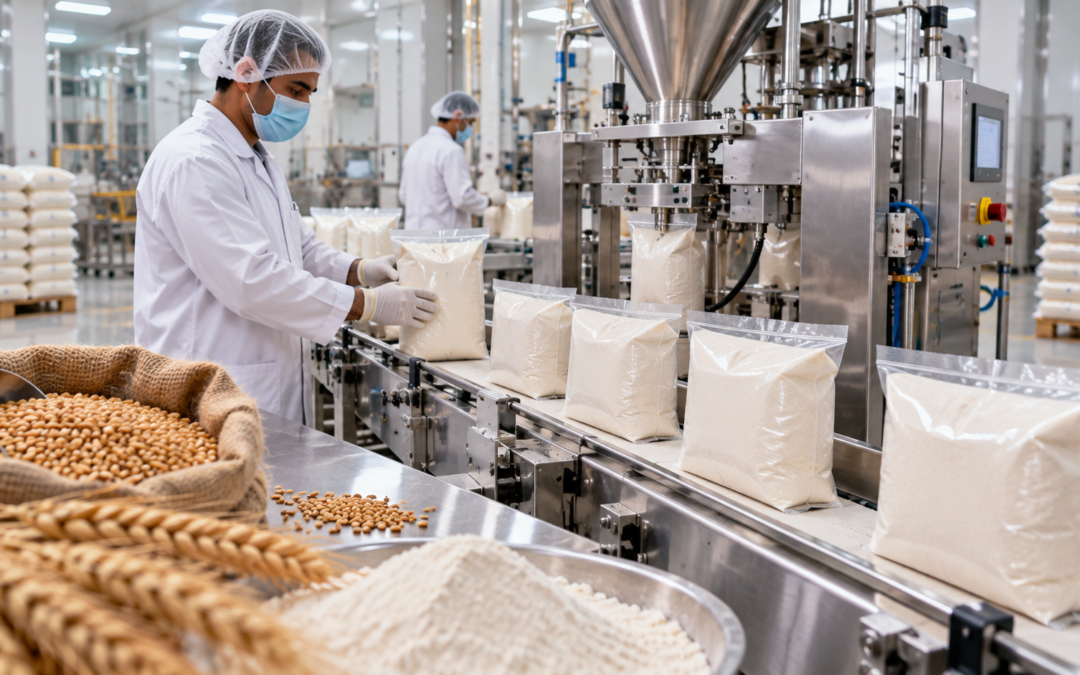
At Ali Shuja Flour Mills, hygienic packaging forms an important part of the production journey, following wheat selection, cleaning, milling, and quality inspection.
Why Does Flour Packaging Matter?
Flour is a food product that needs appropriate handling and protection.
Once milling is complete, the finished flour needs to be packaged in a way that supports its quality as it moves through storage, transportation, and distribution.
Good packaging helps create a controlled barrier between the finished product and its external environment.
Packaging Is Part of the Quality Process
It is easy to think of packaging as simply putting flour into a bag.
In reality, packaging is part of the complete product journey.
At Ali Shuja Flour Mills, the process includes quality inspection followed by hygienic packaging and distribution.
This means attention to quality continues even after the milling process has finished.
From Milling to a Finished Product
Consider the journey:
Selected Wheat → Cleaning → Milling → Quality Inspection → Packaging → Distribution
Every stage has a purpose.
Milling creates the flour, quality inspection checks the finished product, and packaging prepares it for the journey to customers.
Protecting the Product During Distribution
After packaging, flour may need to travel through different stages before reaching a household.
Appropriate packaging helps make the product easier to handle, transport, and store.
This is particularly important for a product used regularly by households, restaurants, bakeries, and other food businesses.
Packaging and Consumer Confidence
When consumers purchase a packaged food product, they expect it to arrive in suitable condition.
Clean and hygienic packaging contributes to the overall presentation of a flour product and reflects the manufacturer’s attention to the complete production process.
A Complete Approach to Flour Production
Ali Shuja Flour Mills does not treat flour production as only a milling activity.
The company’s process covers sourcing, cleaning, milling, quality checking, packaging, and distribution.
This complete approach helps connect the production facility with the consumer’s kitchen.
Experience Meets Modern Production
Ali Shuja Flour Mills has been operating since 1985.
The company combines generations of milling experience with modern production standards, allowing traditional knowledge to work alongside contemporary food manufacturing practices.
What Consumers Should Look For
When choosing packaged flour, consumers can consider:
- The quality of the wheat
- The manufacturer’s production process
- Quality-control practices
- Packaging standards
- Storage and handling
- The product’s intended use
These factors provide a broader understanding of the product beyond its appearance on the shelf.
Conclusion
Hygienic packaging is an important part of the flour production journey.
After wheat has been selected, cleaned, milled, and inspected, the finished flour needs to be properly packaged before distribution.
At Ali Shuja Flour Mills, packaging forms part of a wider process focused on quality, consistency, and delivering flour from the mill to the kitchen.
Why is hygienic packaging important for flour?
It helps protect the finished flour during handling, storage, transportation, and distribution.
When does packaging happen?
Packaging takes place after milling and quality inspection.
Is packaging part of flour quality?
Yes. Packaging is an important part of protecting the finished product.
What happens after flour is packaged?
The packaged flour moves into the distribution stage.
Does Ali Shuja Flour Mills use a complete production process?
Yes. Its process covers wheat selection, cleaning, milling, quality checking, hygienic packaging, and distribution.