Quality flour does not happen by accident. Behind every finished product is a series of production decisions that influence consistency, freshness, texture, and overall quality.
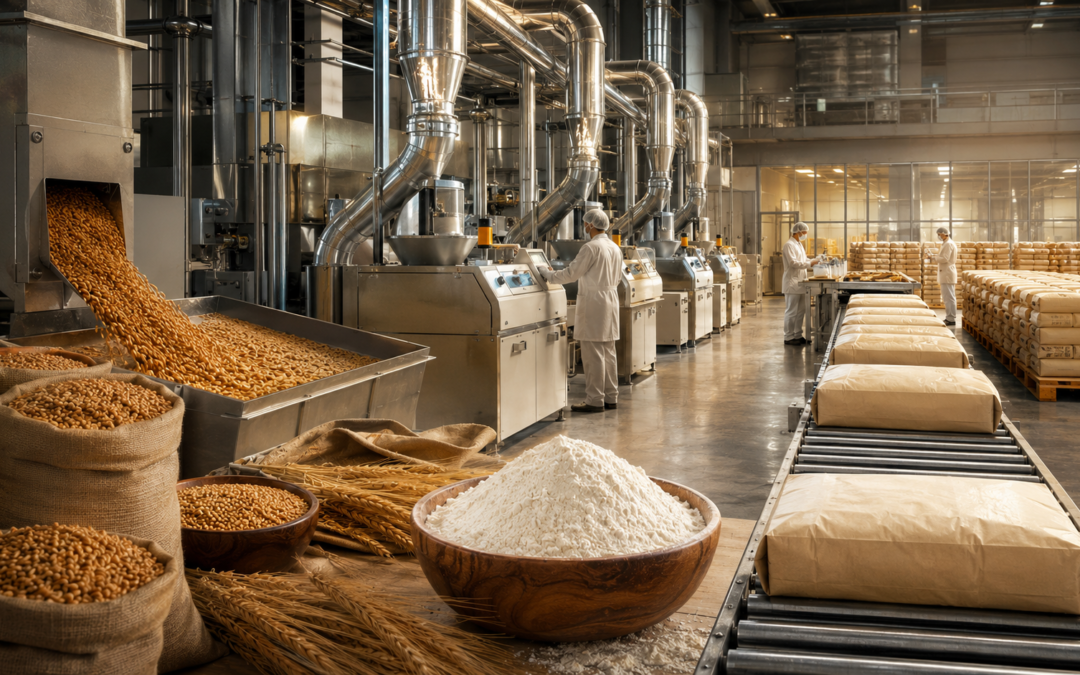
At Ali Shuja Flour Mills, the flour production process follows six main stages: wheat selection, cleaning, milling, quality checking, packaging, and distribution.
Understanding these steps provides a clearer picture of what happens before flour reaches the consumer.
1. Wheat Selection
The first stage is selecting suitable wheat.
Ali Shuja Flour Mills carefully sources high-quality wheat from trusted suppliers and farmers.
This stage establishes the foundation for the rest of the process. If the raw material is not properly selected, later processing stages cannot completely compensate for variations in the starting material.
For this reason, sourcing is treated as an important part of flour production.
2. Cleaning
The selected wheat then moves through the cleaning stage.
Cleaning prepares the wheat before it enters the milling process.
This step is important because the quality and consistency of the milling process depend on properly prepared raw material.
A well-managed cleaning stage supports the controlled production environment required for consistent flour manufacturing.
3. Milling
Once the wheat has been prepared, it is processed through milling.
Milling transforms wheat into flour using modern milling technology.
The milling stage plays a major role in determining the final flour texture. For a product such as Shujah Gold Atta, fine milling is an important characteristic of the finished product.
Modern technology also helps manufacturers manage production more consistently at scale.
4. Quality Checking
After milling comes quality inspection.
Quality checking helps ensure that the finished flour meets the required standards before it moves into packaging.
At Ali Shuja Flour Mills, quality is not treated as a single final inspection. Instead, it forms part of a broader process that begins with wheat selection and continues through production, packaging, and distribution.
This approach supports consistency across the finished product range.
5. Hygienic Packaging
After passing quality checks, the flour is packaged.
Packaging is an important stage because it protects the finished product during handling and movement.
Hygienic packaging also supports the company’s focus on freshness and product quality.
For consumers, packaging is the final physical barrier between the finished flour and its journey to the kitchen.
6. Distribution
The final stage is distribution.
Once flour has been packaged, it needs to move from the production facility to its intended destination.
Careful distribution is therefore part of the overall quality process.
A manufacturer can produce quality flour, but the product still needs to be handled appropriately after packaging.
Why All Six Steps Matter
It can be tempting to think that flour quality depends mainly on the milling stage.
In reality, quality is influenced by the complete journey.
Poor sourcing can affect the raw material. Inadequate preparation can affect processing. Inconsistent milling can influence texture. Weak quality checks may allow issues to pass unnoticed. Packaging and distribution also affect how the finished product reaches customers.
This is why every stage matters.
Quality Is a Complete Process
Ali Shuja Flour Mills describes its approach as a complete process from sourcing premium wheat to delivering finished products.
The six-stage structure creates a clear production journey:
Selection → Cleaning → Milling → Quality Check → Packaging → Distribution
Each step has a specific role, but all six work together toward the same objective: delivering consistent flour.
Supporting Different Product Needs
The same production philosophy supports different products.
Shujah Gold Atta is made from carefully selected premium wheat and finely milled for everyday cooking.
Healthy Grain Atta provides a multi-grain option for consumers interested in a broader grain-based flour.
Although these products serve different preferences, they are both produced within the company’s broader focus on quality and consistency.
Experience Since 1985
Ali Shuja Flour Mills has been operating since 1985.
This long history combines generations of milling knowledge with modern production standards.
The company’s approach demonstrates how traditional expertise and modern technology can work together in food manufacturing.
What Consumers Can Learn From the Process
Understanding the production process can help consumers become more informed about the products they purchase.
Instead of looking only at the final package, consumers can consider:
- Where the raw material comes from
- How wheat is prepared
- What milling technology is used
- Whether quality checks are part of production
- How the finished product is packaged
- How it is distributed
These factors provide a more complete picture of flour quality.
Conclusion
Consistent flour quality depends on more than a single production step.
At Ali Shuja Flour Mills, the process begins with carefully selected wheat and continues through cleaning, milling, quality checking, hygienic packaging, and distribution.
Together, these six stages form the foundation for the company’s approach to producing flour products that consumers can use confidently in everyday cooking.
What are the six stages of flour production?
The six stages are wheat selection, cleaning, milling, quality checking, packaging, and distribution.
Why is quality checking important after milling?
Quality checking helps ensure that the finished flour meets the required quality expectations before packaging.
Why does packaging matter for flour?
Packaging helps protect the finished product during handling and distribution and supports hygienic product delivery.
Does distribution form part of flour quality?
Yes. Proper handling and distribution are part of the complete journey from production to the customer.
What is the main goal of the six-stage process?
The overall goal is to support freshness, consistency, and quality from selected wheat through to the finished flour product.